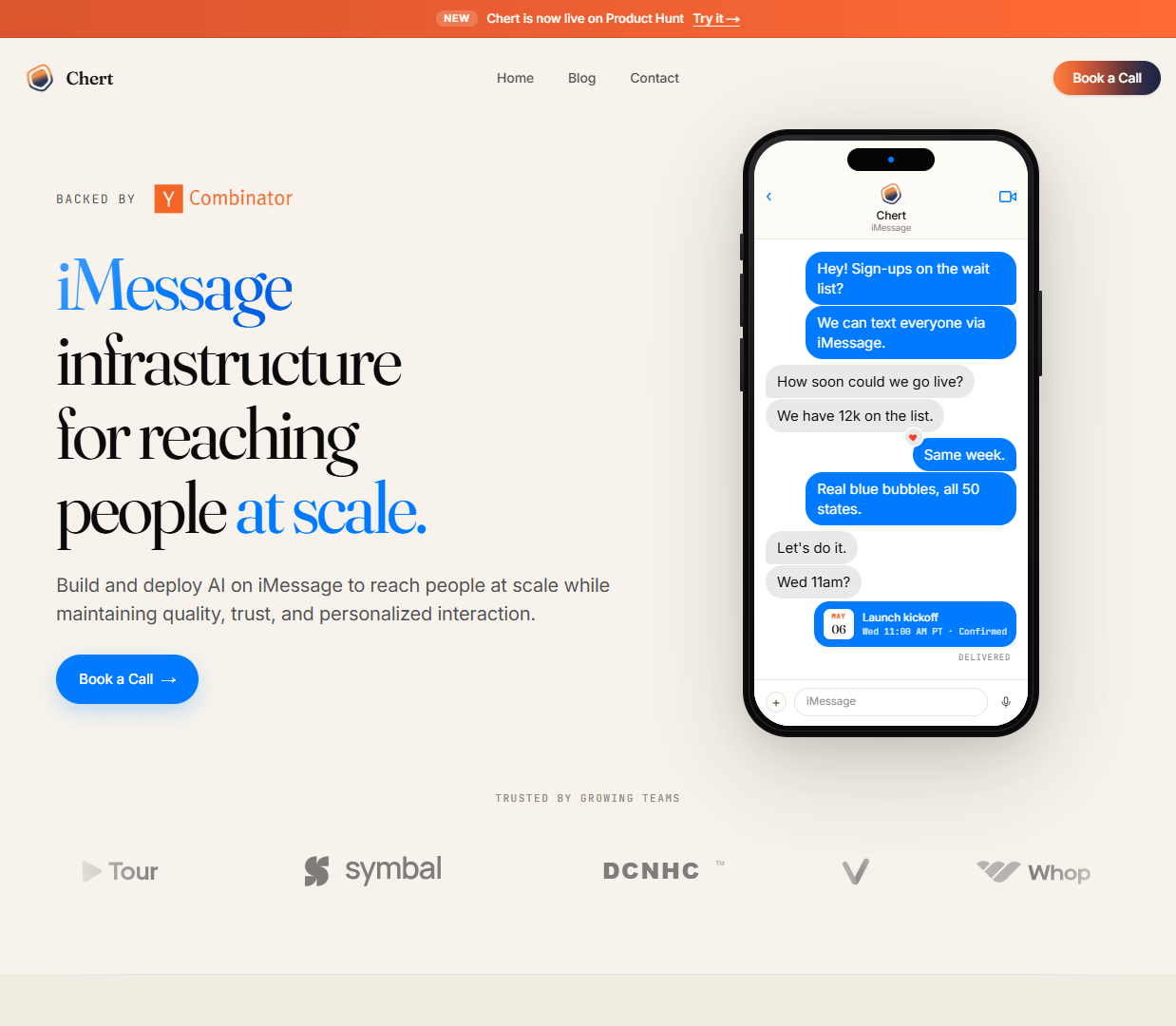
Proof problem40% cold outreach response rate is displayed without source, methodology, or sample size — an extraordinary claim in a category where 10-20% is considered strong. 95% read rate is plausible for iMessage but similarly unsourced. "Backed by Y Combinator" (listed as "Combinator" in footer) is a real and verifiable signal. Trusted-by logos include Whop and Tour — recognizable but small-to-mid-stage companies. Four developer workflow cards have no named customer. FAQ #1 being a legitimacy challenge suggests the product category has a known credibility problem.Visual patternCream-white background with orange accent color. Serif hero headline, minimal nav, iPhone mockup on right. Logo bar below hero (Tour, Symbal, DCNHC, Whop). "One API. Many features." feature grid: eight feature tiles (two-bubble messaging, typing bubbles, attachments, group chats, tapbacks, one-tap feedback, live delivery, sending attachments) plus a "+many more" overflow card. Dark blue metrics bar: 40% / 95% / <10min. "Used by Developers" four workflow cards. "One thread, everywhere your team works" integrations section (Salesforce, Slack, HubSpot, Clay) with iPhone mockup. FAQ section. Dark "Build with iMessage" CTA with embedded calendar. Footer with backer logos. Large Chert wordmark at page bottom.Why it still might convertiMessage has fundamentally higher engagement than email or SMS for consumer-facing products — if the infrastructure is real, the 95% read rate is plausible. Y Combinator backing is a genuine quality signal. Developers who have tried to build iMessage workflows and hit Apple's API restrictions understand the problem well and are willing to pay for a compliant solution. The calendar CTA is low-friction: a 20-minute call rather than a credit card. It converts for developers who know the problem and recognize that anyone who has solved iMessage infrastructure at scale has done the hard work.