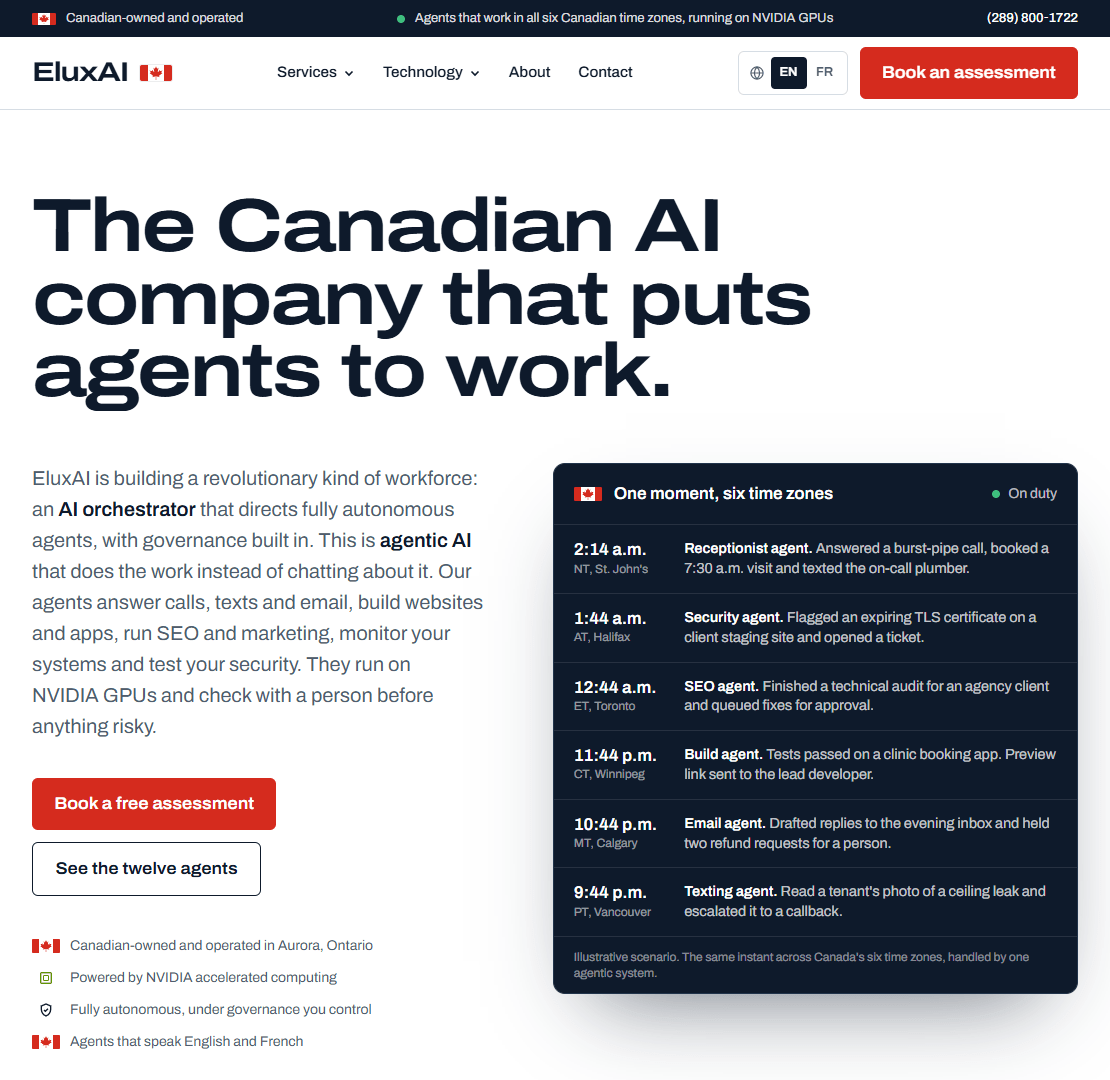
Proof problemThe hero activity feed is honestly labelled illustrative, and product-interface previews are visible. The supplied screenshot does not show named customer case studies, comparative grounding benchmarks, or measured deployment outcomes. The Statistics Canada figures concern national adoption rather than product performance, and the footer expressly disclaims any implied NVIDIA partnership or endorsement.Visual patternWhite and pale-blue institutional sections with navy headings, red assessment buttons, repeated Canadian flags, a six-zone activity console and clock strip, comparison tables, a twelve-agent service catalogue, dark NVIDIA architecture panel, research and reliability cards, sector grids, Canadian privacy messaging, numbered deployment plan, adoption bar chart, governance grid, FAQ, assessment form, and a flag-lined navy footer.Why it still might convertCanadian ownership, bilingual support, local accountability, and private-compute options speak to identifiable procurement concerns. The Agent Charter, approval gates, audit trail, cost caps, kill switch, supervised launch, and explicit limits make the service easier to assess than a vague autonomous-agent promise. A free written plan and a human response offer a low-commitment next step for businesses that want implementation help rather than another self-serve tool.